

Allison Rushby is the author of many books, both women’s fiction, non-fiction, children’s and Young Adult.
In this post, she discusses the keys to surviving (and thriving) as an author in these tumultuous publishing times.
How to survive and thrive as an author
Given your long (and varied) experience in traditional publishing, are you excited by digital publishing or worried?
Allison Rushby: “A little bit of both, I think. It’s very difficult at this point to see how publishing will be operating ten years from now, so this is worrying. The exciting part, however, is the knowledge that it’s only going to become easier to reach more readers in all kinds of territories.
The digital distribution of books will make a huge impact in Australia, in particular, I think. Distribution has always been an issue for us as our country is so large, but with a relatively small population for that size. Digital distribution will revolutionise publishing in Australia, but how this will work for booksellers, publishers, authors and agents right now is difficult to say.”
You’ve chosen to put out your own Kindle book – why did you choose to go that route rather than bring it out through a publishing house?
AR: “Choosing to release Die, Yummy Mummy, Die straight to Kindle was an easy choice. It wasn’t a book that a publisher would really be able to publish, for a start. It’s a compilation of 20 of my favourite Desperate Housewife columns, which used to appear in Queensland’s Courier Mail newspaper.
I wasn’t really interested in publishing more than 20 columns, as I wanted to stick to my, and my readers’, absolute favourites. Even though the column ended some time ago, I’m still asked about it quite a lot and every so often a mum will come up to me in the supermarket, or a car park, and say something like, ‘I’m a bad mum, too!’. I love that (I think) and so this is a book just for them.”
What do you think are the keys for authors to survive/thrive in the current publishing climate?
AR: “Probably versatility and being open to change. I’ve had to try my hand at different genres over the years to stay afloat, especially because this is my fulltime job and I need to keep working.
When opportunities come up, I tend to grab them. For example, just last week I pitched a six-episode young adult e-serial through my agent to a publisher who was looking for something Downton Abbey-esque. I think there’s a perception that successful authors write one book every one or two years and that’s it. But the reality is very different for most fulltime authors.
Pretty much every author I know has a sideline in writing for different areas, or teaching others to write, etc.”
How do you see yourself focussing your efforts in the future?
AR: “I’m currently writing a travel memoir and I have to admit that I just adore writing non-fiction. It’s an area in which I’d like to write more. However, I also really enjoy writing Young Adult fiction.
While I started out in women’s fiction, I think my voice lends itself more to the YA genre. I have a YA book out in February next year in the USA and have also written another one that will hopefully follow close behind. I had a ball writing the first 5000 words of the Downton Abbey-esque e-serial, so while I love the non-fiction, I think I’ll have to find a way to keep writing in all kinds of different areas (finally having both my kids in school is certainly helping).”
Your top three tips for writers hoping to be published in fiction?
AR: “1. Simply start writing. This may sound obvious, but so many people think they need to find a large block of time, the perfect writing space, or the most original, amazing idea ever before they start writing. None of these things are true. All you need is a computer and your backside on a chair (you don’t even need a computer – a piece of paper and the stub of a pencil will do!).
2. Keep writing. Another obvious one, but sometimes the obvious eludes us in creative endeavours, it seems! Writing fiction is a skill and, like any skill, the more you practise, the better you get. Think of your first manuscript as an apprenticeship. It’s only a learning tool. Once you finish that first manuscript, write another one. I see so many writers pause for more than a few years trying to sell that first manuscript, instead of moving on to writing the next one. If they end up selling that first one, that’s a fantastic bonus (and there’s another waiting to be published right behind it!). But don’t waste any time between manuscripts. Keep going.
3. Write what you like to read. I see a lot of writers setting out to try and write what’s hot. But by the time you’ve written your vampire/wizard novel, the trend is well over. What you love reading is a really good indication of what you’ll probably be good at, and enjoy, writing.”
 Are you new here? Welcome to my blog! I’m Allison Tait and you can find out more about me here and more about my online writing courses here.
Subscribe to So You Want To Be A Writer podcast for more amazing writing advice.
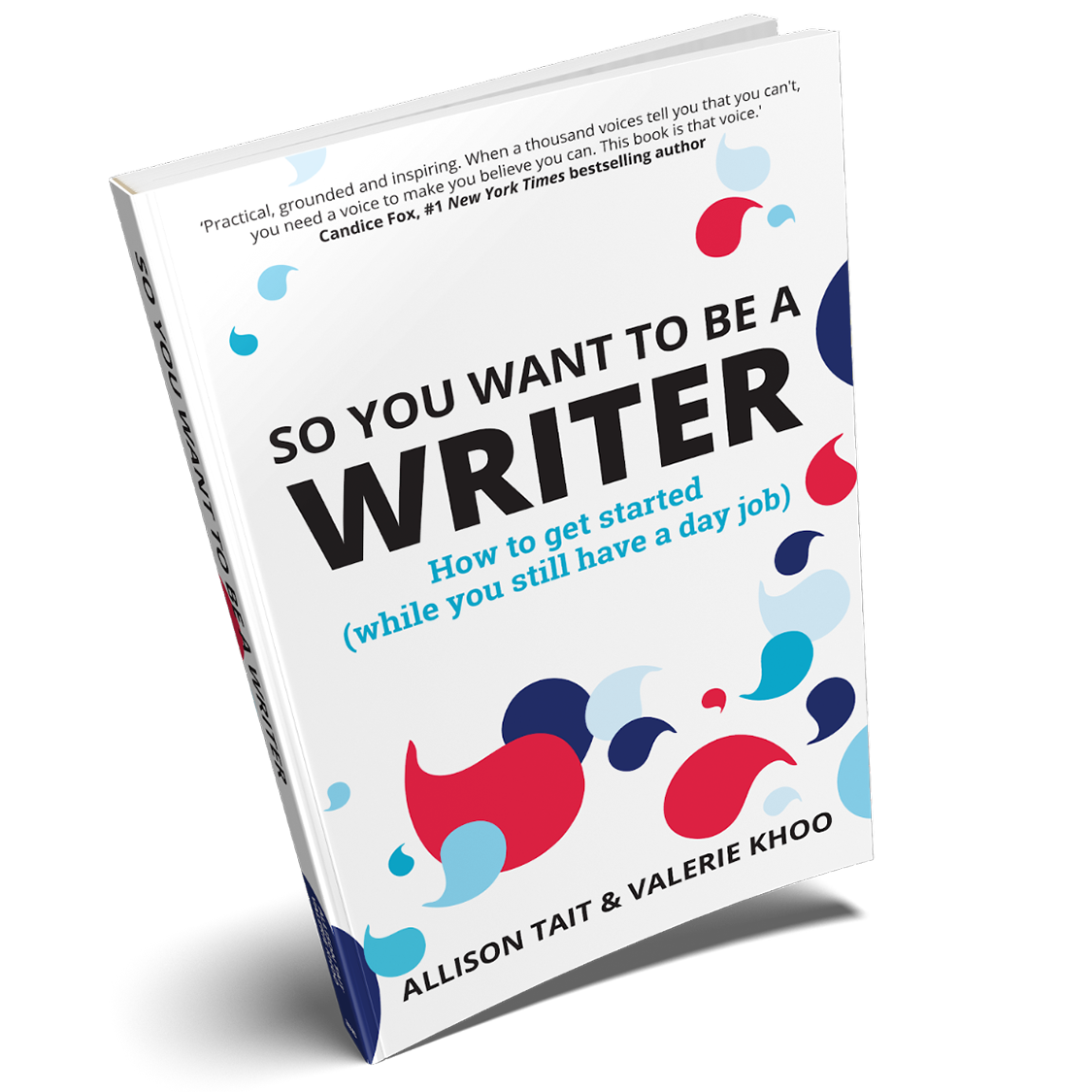
Or check out So You Want To Be A Writer (the book), where my co-author Valerie Khoo and I have distilled the best tips from hundreds of author and industry expert interviews. Find out more and buy it here.

0 Comments