
With National Science Week starting on the 10th of August, it seemed a pertinent moment to consider the art of science and nature writing – and it is an art. Taking the study of, and research for, any aspect of science and drilling down into its essence to present it in a factual, articulate and, perhaps most importantly, engaging way for readers is no mean feat.
And it’s even more of a feat to be able to teach young writers how to do it!
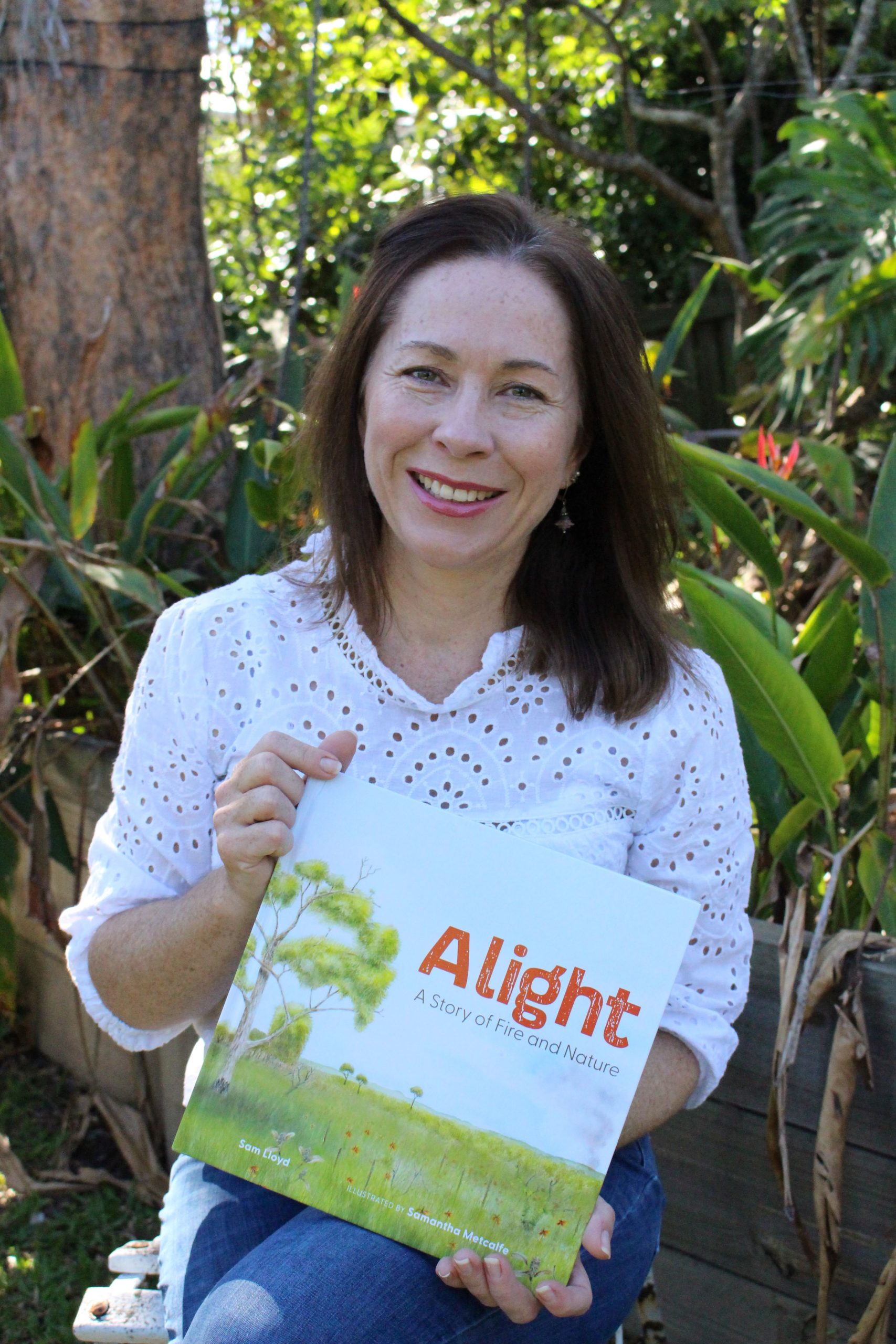 With that in mind, I invited Dr Sam Lloyd over to share some insider insights into just how to nail the art of science and nature writing.
Dr Sam Lloyd is an award-winning Principal Scientist (fire ecologist) for Healthy Land and Water (the official Natural Resource Management body for South East Qld), a dance teacher with Achieve Performing Arts Studio and a writer.
Her first book, Alight: A story of fire and nature, published in 2023 by CSIRO Publishing and illustrated by Samantha Metcalfe, is a children’s non-fiction narrative that shares the story of Australian plants and animals during a planned fire and gently explores the importance of healthy fire to the Australian bush.
Sam was kind enough to bring along not only her top tips for young science and nature writers, but her very best advice for adults, at home and at school, who are nurturing those young writers.
Let’s start with the grown-ups.
Supporting young writers to nail science and nature writing
By Dr Sam Lloyd
Often, we think of science as something that happens in a laboratory and nature as something that we see when we go bushwalking, or in a documentary – but the truth is that both science and nature are interwoven all around us and essential to every part of our lives.
In particular, ecological science, which is the study of how living things (including people and microorganisms) interact with each other and the natural environment, including plants, animals and fungi, is an example of a natural science that is both accessible and readily observable.
For instance, we might witness insects and birds pollinating flowers or skinks basking in the sun in our backyard.
Science and nature picture books and stories have always held a special place in the hearts of children and society. However, appreciation and recognition for the broad and beneficial outcomes of science and nature-based children’s literature has grown rapidly over the past decade.
For example, there has been increasing demand and interest in ecological and environmental books – no longer are these titles confined to the classroom or school library!
Beautiful, engaging and informative books are being published for children and their grown-ups to enjoy in their homes and outside of formal learning environments.
These books include various forms of non-fiction (e.g. traditional, narrative, browsable and expository) and realistic fiction. Australian publishers are increasingly active in this space, showcasing the unique and fascinating Australian environment, science and technology knowledge and stories on the national and international literary stage.
Arming young writers for science-writing success
Many of us work and/or live with children and young people who enjoy writing and creating non-fiction science and nature stories for fun and enjoyment. Of course, there are also curriculum requirements that mean children need to be armed with the skills and confidence to write and communicate about science and nature in difference formats and for difference audiences.
However, this can be difficult to facilitate as we may not be as familiar with the different forms of non-fiction writing and it does not generally receive the same attention that creative writing does.
Add to this a science topic that is unfamiliar and it can be a challenge to support your young person/student in the way you might want to, if you don’t feel confident in the style yourself.
However, when we take a closer look, non-fiction writing is what most of us experience every day. It can be simple in its format, accessible in design and engaging in content.
Non-fiction writing comes in different forms
When we write a fictional story, we have the freedom to create characters and plotlines that may never be possible in the real world. This is one of the reasons fiction is so popular, it makes the impossible possible and breathes imagination into new worlds.
When we are writing about science and nature, non-fiction offers us endless opportunities to observe and translate information from the real world into a format that children will enjoy and learn from.
The non-fiction format includes traditional explanatory non-fiction books, and some of my favourites include ‘Wonderful Wasps‘ by Katrina Germein, illustrated by: Suzanne Houghton, ‘Bonkers about Beetles‘ by Owen Davey, and ‘A Hollow Is A Home‘, a short reference book by Abbie Mitchell and Astred Hicks.
There are also beautifully illustrated and designed books that reply heavily on visual images to convey messages (i.e. browsable non-fiction) and I think Sami Bally’s Illustrated Encyclopaedia series is a brilliant example of this.
But non-fiction can also take the form of a narrative, where you can tell a story, but it must be something that could otherwise occur in the real world.
Narrative non-fiction is, in a way, the perfect compromise of both writing worlds and especially lends itself to science and nature stories. You have the creative aspect of character development and a plotline, whilst ensuring the story is set in, and based on, real world environments, characters and information.
It provides an opportunity to share science and nature information in a way that is more engaging and interesting than traditional forms of writing (like a text book) or more modern information sources that may not always be adequately referenced (like some websites).
Aside from my own ‘Alight: A story of fire and nature‘, examples include ‘The Beehive‘ by Megan Daley and Max Hamilton, ‘The Echidna Near My Place‘ by Sue Whiting and Cate James, and ‘Iceberg‘ by Claire Saxby and Jess Racklyeft (all picture books), as well as the Aussie STEM Stars series (middle-grade).
One of the best ways to help young writers improve their science/nature/non-fiction writing is to expose them to wide array of the different types of books on offer in this area. Choose a subject they’re interested in and then look for different types of factual texts that cover that topic.
Then share the following tips with them.
Top Science and Nature Writing Tips for Young Writers
By Dr Sam Lloyd
• Choose a subject that you’re passionate about – or even just something that sparks your curiosity. It’s much easier and more enjoyable to write about something when you’re interested in it.
• Be clear about your idea and your audience. If you’re writing for a school project, follow the brief as best you can. If you’re writing for a competition, think about what the judges are looking for. It’s hard to cover a whole topic in a short project – frogs or birds, for instance – so choose a specific angle, perhaps one type of frog or a particular bird.
• What are the two or three most important messages you want your reader to understand? Decide what these are and make sure you include them clearly (and more than once) throughout your work. This will give your reader the best chance of remembering.
• Illustrations are important: illustrations, photos, diagrams are all examples of ways you can convey a message or information with far fewer (or no) words. This might include a graph, infographic or diagram with scientific results, or an illustration to accompany text.
• Write and review and then review again: revision is all part pf the process, it does not mean you are doing something wrong, it is in fact the opposite. If you are feeling frustrated, it can help to leave your writing task for a couple of days and come back to it after a break.
• Ask an expert: if you don’t know something and it is not something you can find using other reliable sources (including books and online), it is worth asking someone who can help. Ask a grown-up to help you find an expert to contact.
• Keep a record: If you find a useful piece of information it is super important to keep a record of where you got the information. I recommend creating a spreadsheet where you can record the information you need. This includes the information source (e.g. website, book etc), author, person you spoke to and date.
• Celebrate your achievement! Writing can be tough and brilliant at the same time. When you have finished your writing task, be sure to take a moment to do something enjoyable to celebrate your efforts (I recommend cake!).
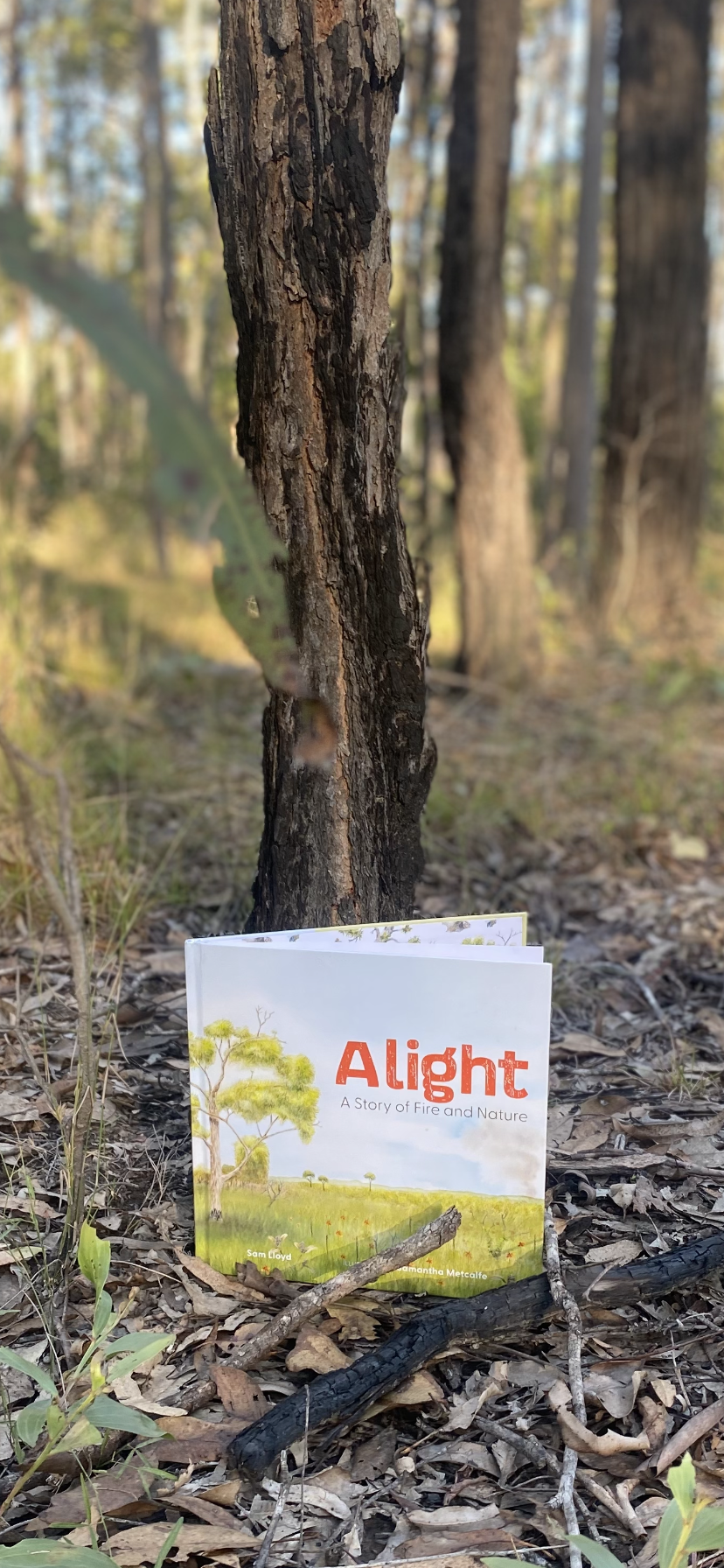 Dr Sam Lloyd is a scientist, fire ecologist and writer with a passion for the Australian bush and children’s literature.
Find out more about her and ‘Alight: A story of fire and nature’ here.
 Are you new here? Welcome to my blog! I’m Allison Tait, aka A.L. Tait, and I’m the author of middle-grade series, The Mapmaker Chronicles, The Ateban Cipher, and the Maven & Reeve Mysteries. My latest novel THE FIRST SUMMER OF CALLIE McGEE is out now. You can find out more about me here, and more about my books here.
If you’re looking for book recommendations for young readers, join the Your Kid’s Next Read Facebook community, tune in to the Your Kid’s Next Read podcast and sign up for the Your Kid’s Next Read newsletter.

0 Comments