by Allison Tait | Dec 11, 2017 | Reading, Writing, Writing for kids, writing tips for kids, Your Kid's Next Read
 When I asked Australian children’s author Tim Harris to write me a post for kids who love to write, there was no question of the topic: remarkable characters.
Tim’s latest book, Mr Bambuckle’s Remarkables, features a fabulous cast of characters and there’s no doubt that kids have taken to the amazing Mr Bambuckle with gusto.
Tim took up the challenge with great enthusiasm and so, without further ado, we present… Tim Harris’s Top 6 Tips For Creating Remarkable Characters
Right, before we begin, I’d love you to have a little think for me. Close your eyes for a moment and –
Tim, Tim, Tim, what are you doing? The readers can’t close their eyes. They’ll miss the whole blog post!
Gosh, you’re right. Thanks for pointing it out.
You’re welcome.
Now, getting back on track, think about a book that you love … Think about what makes the characters remarkable. Is it the scar on their forehead? Their ability to spin spider web from their hand? Or the fact they can think divergently?
Creating remarkable characters in children’s books can be a lot of fun. Here are six tips to help get you started.
- Name your characters accordingly. Remarkable characters often have fitting names. Matilda’s teacher, Miss Honey, is as sweet as sweet can be. Nobody trusts a snake, so why trust Professor Snape? Batman is a … bat man!
I’m Barney, but most people call me Bargey.
Why do they call you Bargey?
Because I always barge in on others’ blog posts.
I see. Well, I’d prefer if you kept your thoughts to yourself.
Sorry.
- Keep it simple. This may sound rather unremarkable, but by not overcomplicating things – giving your characters just a handful of distinct traits – you can make a real impression. For example, Fred and George Weasley guarantee cheekiness and loyalty, BFG is gentle and quirky in speech, Katniss Everdeen is brave and determined.
And I interrupt a lot!
Exactly right, Bargey.
Can I tell you something, Tim?
Not now.
- Give your characters physical presence. Perhaps your character always wears black. Maybe there’s a constant sparkle in their left eye. They might walk with a limp, or twiddle their thumbs when they’re nervous.
I’m invisible. That’s my look.
It’s rather unique, Bargey. Good for you!
Can I tell you that thing now?
Sorry, I’ve got other points to make.
- Be consistent. Once you have established the desired traits of a character, keep on keeping on. If you are consistent with they way a character speaks, chews on their lip or responds to challenges, your readers will begin to know them.
Just like me! I consistently barge in.
You certainly do.
- Give the characters problems to deal with. While this is closely related to plot, it’s important to ensure you have the right character for your story. When we put characters through difficulties, we can bring out their very best or worst. Think about Samwise Gamgee in Lord of the Rings. His fierce loyalty and determination was an asset to Frodo during tough times. How a character deals with a problem will often define them.
There’s something I really need to tell you, Tim. It’s important!
It will have to wait.
It can’t wait. It’s serious. You see, there’s a certain point in a blog post that –
Sshhh. I’m about to move on to the sixth point – can’t you see that!?
- Characters should want. If a character longs for something, it will move both them and the story forward. Can you imagine how boring Charlie and the Chocolate Factory would be if Charlie wasn’t interested in winning a golden ticket? What does your character long for? How will they get it?
Tim, I really need to tell you that thing. It’s urgent.
Okay, okay … What is it, Bargey?
You’ve reached the end of the blog post.
So I have. Dang.
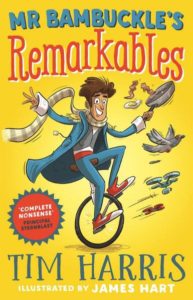 Thanks Tim! As you can tell, Tim’s writing is energetic, lively and full of fun – it’s no wonder that kids love him. Find out more about Tim Harris and his fabulous books here. You can also buy Mr Bambuckle’s Remarkables here or pre-order Mr Bambuckle’s Remarkables Fight Back (book 2) here.
If you enjoyed this post, you might also like:
Writing For Kids: Write What You Love
How To Be More Creative
The 10 Keys To Writing A Great Story
Do you have a kid who loves to write (or one who would love to write better)? My online creative writing course for kids is just the ticket! The course is designed for kids aged 9-14, to teach them the tips, tools and techniques of writing – but also to inspire their creativity and motivate them to write! You can find all the details here, at the Australian Writers’ Centre website.
by Allison Tait | Oct 2, 2017 | Advice for Writers, Writing, Writing for kids
 When I asked my friend Allison Rushby, author of many novels for children, YA and adults, to come up with a post full of writing tips for kids, I had to laugh when she sent me one with this headline:
Writing for kids: stay weird, stay different
But when I read further, I found myself nodding along at every point (well, maybe not the talking fox bit, but most of it). So here she is, with one of the best pieces of writing advice any kid will ever read.
Okay, so the number one question I get as a writer is probably one you can easily guess: “Where do you get your ideas from?”. I think it’s a fair question. After all, my latest book for younger kids (The Turnkey, Walker Books) is about a long dead little girl called Flossie Birdwhistle who lives in London’s twilight world and has the job of keeping the interred of Highgate Cemetery happily at rest.
To be honest, it would be perfectly fair to be on the receiving end of questions that go more like, “Where do you get your ideas from, because I’m a little bit worried about what goes on in your head, you very strange person”.
But wait, there’s method to my madness.
Of all the books I’ve written, I think The Turnkey is actually a really good study in where writers get their ideas from, because I approached the writing of it with a completely different method to my other books: I decided to cram everything I have always absolutely adored into the one book and I then formed a story around that.
Why? Well, at the time I wasn’t sure. I just felt like doing it—I felt like writing something very personal. Something just for me. I didn’t care what anyone else thought. I didn’t care if a publisher would buy it, or if readers would want to read it. I just wanted to write something that entertained me. So, once I’d decided on this strategy, I sat down with a notebook and started jotting down things I might like to include. This is the list I came up with:
WWII
London
The Blitz
A talking fox (every good book has a talking fox, right?)
Ivy
Tea
and Victorian cemeteries
Now, I couldn’t tell you exactly why I love all these things. I just do. I’ve always been interested in history, my dad is English and my grandmother lived through the Blitz and told me many stories about the war years. I also once had a bit of a scary experience when I was little, my family getting locked out of our car in an old cemetery (I quickly convinced myself we’d have to live in the cemetery forevermore).
So, yes, it was a bit of a weird list I ended up with, but one thing I knew for sure—everything on it was something I was intensely interested in. They were all things that would make me prick my ears up whenever they were mentioned. Things that would make me listen harder. Ask questions. Want to know more.
You have things like that too. I know you do.
It took me several years to write The Turnkey. I’d just finished the first draft when I was watching the 2015 Academy Awards. A man called Graham Moore gave a speech that resonated with me greatly and made me think a lot about The Turnkey and my approach to the writing of it. In this speech he encouraged people to, “Stay weird. Stay different”. And, I’m not joking, I stood up when I heard him say that.
Because he was so right.
Graham Moore might have been talking about bigger struggles—personal struggles—but his advice still rang true.
To be a writer, you have to embrace your weirdness. Staying weird, staying different, is what makes you an artist in your own right. It’s what makes your writing unique. Writers are often told to “write what you know”. It’s a bit of a scary statement, because I think it often intimidates people (new writers especially). It makes them doubt their ideas and their ability to develop characters.
This is why I think Graham Moore’s advice is better. It’s not about writing what you know. It’s about writing what you love. What interests you. What makes you different. That’s where your best ideas come from. They come from your heart. From the things that make you prick your ears up and listen in. From the things that are what you are all about, through and through.
Like I said, I can’t tell you exactly why, for me, these things include talking foxes and tea. It’s just the way it is.
But I can tell you this: next time you’re worried about never having another good idea, don’t be. Look deep inside. Remember what you love. Consider what makes you you.
And, like Graham Moore said:
Stay weird.
Stay different.
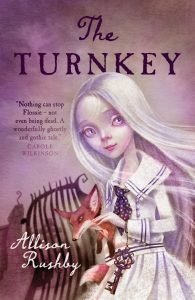 Allison Rushby is the author of more than 14 books, including three YA novels and six Middle Grade novels. Her latest novel, The Turnkey, is getting fantastic reviews. You can find her on Facebook and Twitter.
Do you have a kid who loves to write (or one who would love to write better)? My online creative writing course for kids is just the ticket! The course is designed for kids aged 9-14, to teach them the tips, tools and techniques of writing – but also to inspire their creativity and motivate them to write! You can find all the details here, at the Australian Writers’ Centre website.
by Allison Tait | Sep 24, 2017 | Writing, Writing for kids, writing tips for kids
 The number one question that kids ask me when I do school talks, more popular even than how much I earn or what colour my toothbrush is (true story, I get asked this!), is this one:
Where do you get your ideas?
When I tell them that ideas are all around us and that writers are just people who’ve trained themselves to see them, I can see immediately that some kids get it straight away – and others are more confused than ever.
“I’m not very imaginative,” one girl told me. “I don’t really see dragons and fairies all around me.”
“Er, neither do I,” I said, “but everywhere I look there are things that spark ideas for stories, and sometimes dragons wander into those stories…”
The truth is, though, that it’s actually the second part that’s most important: writers are people who’ve trained themselves to see ideas. Trained themselves. Practised over and over.
But how do you do that? Can you really learn to be more creative?
I think you can, and I’ve got five tips for you that will help get your training started.
HOW TO BE MORE CREATIVE: FOUR WRITING TIPS FOR KIDS
1. Let yourself be bored
I know what you’re thinking. “Allison, seriously?” But I’ve got to tell you that it’s very hard to come up with creative ideas when you’re filling every waking minute with your phone or social media or television or sport or whatever form of organised (or disorganised) activity you reach for when you have five minutes to yourself.
The best ideas happen when you’re not busy doing something else. Give yourself some space in your day for thinking and wondering.
2. Try something new to read
Sometimes we get into a rut with our reading. We know what we like, and going back to it over and over is like revisiting old friends. I get that. I still have books that I read when I was a kid and I love slipping back into those worlds.
But I have to tell you that it’s the other stuff I read – the different things, the non-fiction, the books recommended to me by other people, the books I didn’t even think I’d like – that give me the best ideas for my own stories.
The same goes for things you watch. When I tell kids at my school talks that I get some of my best ideas for stories because my husband likes to watch train documentaries, they look at me like I’ve lost the plot. But I do. Those train guys visit some of the weirdest and wackiest places and I get ideas every time I watch one.
Try something new. You never know where it will take you.
3. Write it all down
If you have a great idea for a story, or even if you just see something funny one day, or hear a word you really like, write it down. Keep a journal.
This does not have to be a diary, as in ‘today I woke up, went to school, it was boring, I came home’, but rather just somewhere for you to keep little snippets.
Make it a habit to write one thing in it every day. One tiny thing you saw, or heard, or read. Maybe it’s a picture, or a snippet from a newspaper (if you still have one), or something that grabbed your attention in a train documentary (seriously, it happens…).
If you do that, you will never be short of a story idea. When someone asks you to write a story, you just go to your journal and pick the idea you like best.
4. Think about why you write
I get it. Sometime you’re only writing because you have a school assignment due. But I think it’s always worth considering the true beauty of writing. And it’s this:
When you write, you control the whole world of your story.
Nothing happens unless you want it to.
The bad guys always get their comeuppance (if that’s what you want).
The good guy always has the wittiest retort to any playground insult.
Is there anywhere else in your life that you get to control everything? I thought not. Tap into your creativity by taking one thing that happened today that you wish had gone differently, and write it the way you want. Make it so.
 Are you new here? Welcome to my blog! I’m Allison Tait, aka A.L. Tait, and I’m the author of two epic middle-grade adventure series, The Mapmaker Chronicles and The Ateban Cipher.
You can find out more about me here, and more about my books here. If you’d like to learn more about writing from me, have a look at my Creative Writing Quest For Kids, an online course that takes you through the process of writing a great story from start to finish.
PSSST! I’ve also got some great tips for parents here: 5 tips to help get kids creating (not consuming)
by Allison Tait | Sep 14, 2017 | Advice for Writers, Blog, Writing, Writing for kids, Your Kid's Next Read
 I’m over visiting Scarlet Paolicchi at Family Focus blog this week, talking about writing for kids, and the 10 keys to writing a great story.
This post is based on a new workshop I’ve created for school visits called ‘Unlocking The Story Code’, based on, you guessed it, The Book Of Secrets, and so far it’s proved very popular, with great teacher feedback.
I love developing new workshops for classroom visits. My ‘Mapping Your Story’ workshop, themed around The Mapmaker Chronicles, takes in images of beautiful old maps, while the ‘Find Your Writing Superpower’ workshop is full of bright colours and superheroes.
Huge thanks to the fabulous Maxabella Loves who takes all of my ideas and turns them into cracking visual presentations.
If you’d like to find out more about my workshops and author talks for schools (and for adults for that matter), you’ll find some details and contact information here.
And you’ll find the full post of Storywriting For Kids: How to write a great story here.
by Allison Tait | Aug 17, 2017 | Reading, Writing, Writing for kids, writing tips for kids, Your Kid's Next Read
 One of the things I love most about all of the various things I do is meeting other writers. Through the podcast, the blog, social media and the Your Kid’s Next Read Facebook group, I get to come into contact with the amazing people out there who are writing all of the things.
One of those people is Shane W. Smith. I first met Shane when I took my boys to ComicGong a few years ago, and he agreed to be interviewed on the podcast about how he writes graphic novels. Since then, he’s given me some great readings recommendations for the boys (who both love comics and graphic novels) and is an enthusiastic member of the YKNR FB group.
Who better, then, to write a post about how to write comics – with tips suitable for kids or beginners of any age!
Take it away Shane…
So you want to write a comic? Awesome! Working in comics is a fantastic experience, and a great way to build up your visual storytelling skills.
The process for making a comic usually goes like this. A writer puts together a document called a script, which uses words to describe everything that will happen in the comic, page by page. Then an artist uses that script as a set of instructions to make the pictures.
While you could fill entire books with advice about comic writing (and people have!), here are three tips that you should always bear in mind, no matter what kind of comic you’re putting together.
- There are no rules
There’s a lot to keep in mind when you’re putting together a comic script. Thankfully one of those things doesn’t have to be a rigid script format.
There are no real rules for how you have to lay out your script, or what you need to include. You don’t even have to write a script – in the olden days of Marvel comics, writers would produce a short story synopsis and leave pretty much everything else up to the artist. You might want to go the other extreme and write pages of description for each panel. Most likely, you’ll choose an approach somewhere in between these options.
The only thing you really need to bear in mind is how important clarity is.
The primary purpose of a comic script is to give the comic’s artist a blueprint for their role in the process. Keeping your description clear is the most important thing, and is easy to do if you focus on one simple questions: what can we see in the panel?
If you’ve already teamed up with an artist, you can discuss the right level of detail for the script together. Make your own rules, but make sure you keep it clear. If you’re doing your own art, you might be able to work entirely from rough notes and dialogue.
- One action per panel
One of the most common mistakes writers make with their first comic scripts is to include multiple actions in a panel description. “Detective Walker crosses the room to his desk and sits down” is impossible to depict in a single comic panel. A character cannot be walking over to their chair and sitting down in one image.
But there’s something wrong with this panel description, too: “He blinks in surprise.”
It’s only four words, and it’s only one action.
What could possibly be wrong with it?
It seems astounding at first glance, but it takes three consecutive panels to depict something as basic as a single blink. Eyes open, eyes closed, eyes open again. Without any one of those panels, the story told by these images changes.
It helps if you think of the comic panel in much the same vein as you would a photograph. Lay out some photos in front of you, and write ‘panel’ descriptions for them – you’ll quickly get the hang of it.
If you’re producing your own artwork for your comic, this is something you’ll be able to deal with and correct on your own, but if you’re writing a script for someone else to work on, it’s best to iron out these bugs up front.
- Your readers’ eyes
Thinking visually is one of the greatest challenges and amazing opportunities facing comics writers. While you can leave matters such as page layout and character positioning up to your artist, your comic will be immeasurably improved if you are able to consider these matters as well.
It helps, for instance, to know that a reader’s eye will travel down the page in a lazy Z shape. If you plan to position your characters, their speech bubbles, and the direction of their actions to also travel along these lines and guide the reader’s eye, reading your comic will be a smooth and pleasurable experience.
Actions and movement that break this reader flow can be jarring for readers to process, so it’s best to focus on keeping the flow going in the right direction.
While this responsibility is more likely to fall upon the artist than the writer, it’s still something that you as the writer should know as well, especially if you’re writing page layouts into your script… and it’s definitely something you should know if you’re producing your own artwork.
(Bonus) 4. Have fun
It’s a very exciting time to be working in comics, and finishing a comic is a hugely rewarding achievement.
Good luck!
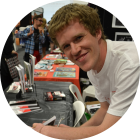 SHANE W SMITH is a graphic novelist based in Canberra, Australia. Three of his graphic novels have been shortlisted in national awards, including the fan-favourite zombie-family-drama Undad. While most of his books are aimed at older readers and adults, James Flamestar and the Stargazers, a post-apocalyptic-musical-adventure-romance book which proves that art has the power to change the world, is suitable for readers aged ten and up.
Grown-ups can obtain a free copy of James Flamestar and the Stargazers for the whole family by signing up to Shane’s mailing list.

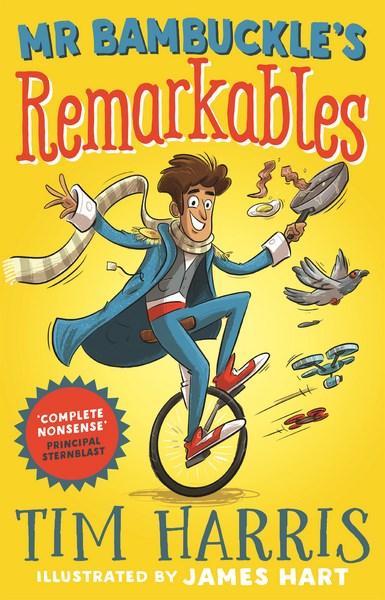 Thanks Tim! As you can tell, Tim’s writing is energetic, lively and full of fun – it’s no wonder that kids love him. Find out more about Tim Harris and his fabulous books here. You can also buy Mr Bambuckle’s Remarkables here or pre-order Mr Bambuckle’s Remarkables Fight Back (book 2) here.