by Allison Tait | Aug 2, 2024 | Blog, Reading, writing tips for kids, Your Kid's Next Read
‘Tis the season of school visits and I’m lucky enough to have been invited by the NSW Branch of the Children’s Book Council of Australia (CBCA) to visit four local schools who are participating in the CBCA Sun Project: Book Of The Year Shadow Judging program.
The Shadow Judging encourages young voices from groups across Australia to join the conversation about the annual CBCA Book of the Year Shortlist and choose their own winners. Groups choose one category from the shortlists to read, discuss and reflect upon, and then create a creative response to each book in the category and vote on their favourites.
The 2024 Shadow Judging Book of the Year Awards winners are decided by the kids’ votes, and will be announced as part of the awards rollout on August 16, putting the thoughts of young readers right into the mix in deciding the best books of the year.
It’s such a great initiative to encourage young readers to engage critically and creatively with the shortlisted titles.
One of the stated benefits of the Shadow Judging program is to ‘support the development of reading breadth, depth and a sense that reading is a cultural practice where opinions are shared in a supportive reading community’ and I am here for that!
So, when I was asked by one of the four schools, in particular, to bring my top tips for literary judging, I took my role very seriously and reached out to my Your Kid’s Next Read podcast co-host Megan Daley to provide tips from someone who’s experienced and respected in the field.
Megan Daley’s top five tips for literary judges
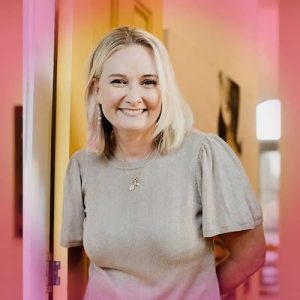 As well as being my partner in Quality Waffle, Megan Daley is a Teacher Librarian and has been awarded the ASLA Australian Teacher Librarian of the Year 2023 and the SLAQ Queensland Teacher Librarian of the Year, as well as the national Dromkeen Librarians Award.
She is the author of the bestselling book ‘Raising Readers’ as well as ‘Teacher, Teacher’ and ‘The Beehive’. A former national vice-president of the Children’s Book Council of Australia, Megan is also a speaker, regular literary judge, and festival curator.
Megan has been a literary judge for the Queensland Literary Awards and The Wilderness Society Awards as well as for several regional literary awards.
In short, Megan has credentials in this space.
These are her top five tips on literary judging for the CBCA Shadow Judges – and for those brilliant educators who are leading groups of ‘Shadowers’ at their schools.
1. It’s not about you
It is very easy to fall into the trap of being drawn to a book for an award because you like it. I have been guilty of this myself and I work very hard on this. Taking out personal opinion is tricky but to help, fall back on the criteria and read knowing that the book may not have been written with you as the target audience but that does not mean it is not worthy.
2. Criteria, criteria, criteria
My day job is as a teacher and as a teacher and a mother of teens who are all doing assignments right now – always start and end judging (and assignment writing!) with the criteria. Read the judging criteria, highlight the criteria, unpack what the criteria is asking for and keep the cirteria close so that you can keep going back to it.
3. Target audience
Think about who a particular book was written for and does it meet the reading needs of that audience. If it is a picture book aimed at toddlers – will it engage them in all the right ways? If it is a picture book for a mature audience – will it make the reader work hard and think deeply? Do the illustrations and text work in unison?
4. Wow factor
After having considered all of the points above look at whether a book has something extra special about it that elevates it above the rest? It may be something you cannot quite put your finger on, it may be a super original idea done in an engaging way, it may be astonishing interplay between text and images. If a book makes you go WOW, then that is a book to put on your own personal shortlist.
5. Read every book
Read every book in the mix for the judging – every single book needs to be given a chance and some books may surprise and delight you. Each book needs to be judged individually but do read all the books in the mix.
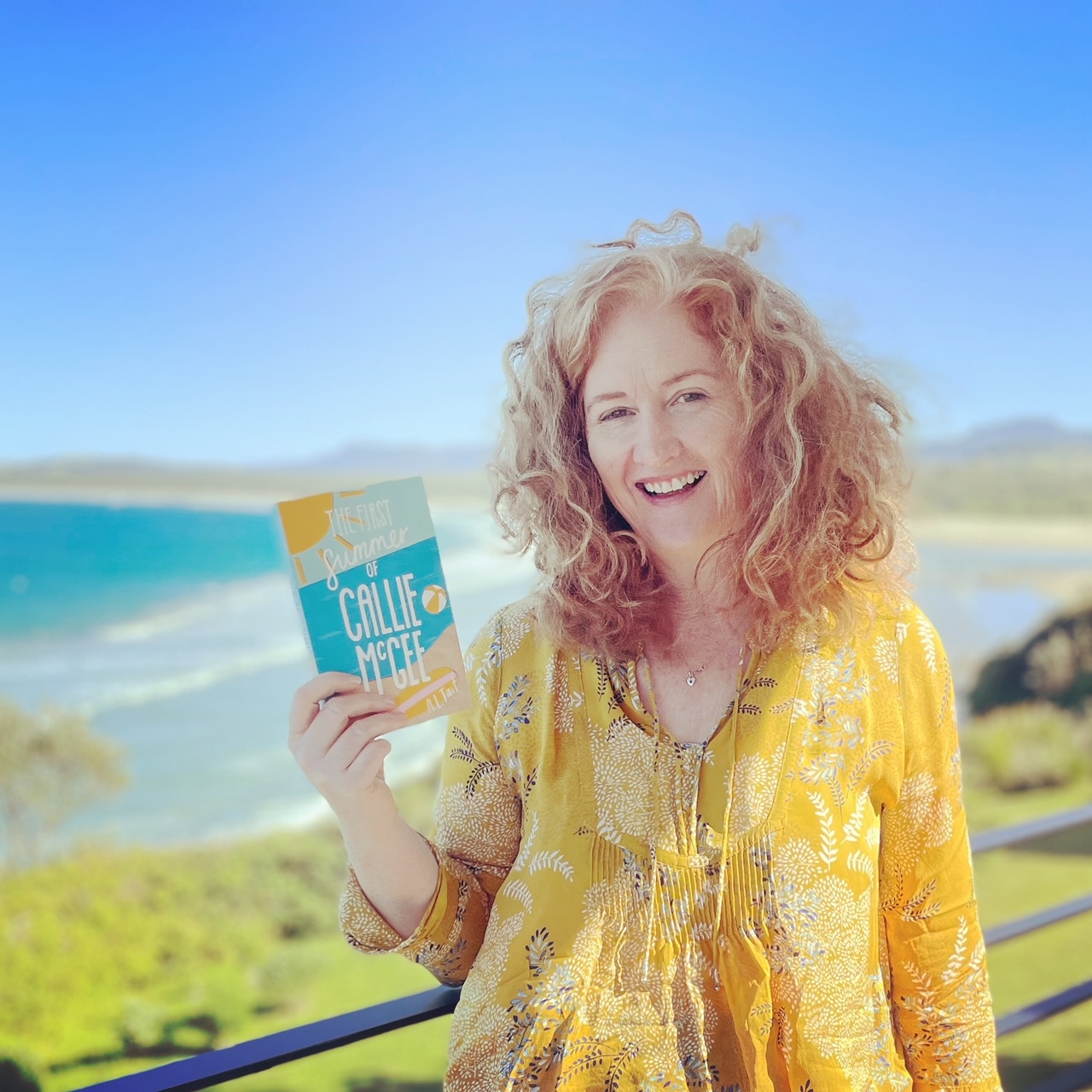
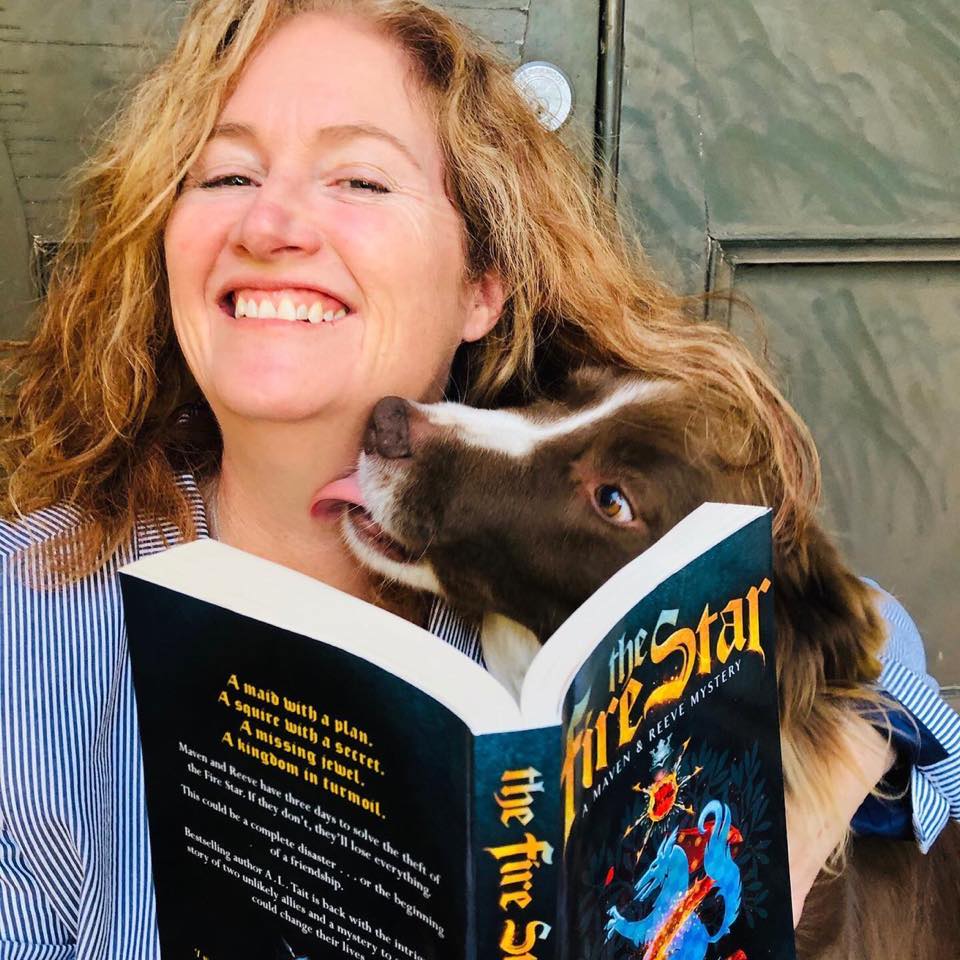
 Are you new here? Welcome to my blog! I’m Allison Tait, aka A.L. Tait, and I’m the author of middle-grade series, The Mapmaker Chronicles, The Ateban Cipher, and the Maven & Reeve Mysteries. My latest novel THE FIRST SUMMER OF CALLIE McGEE is out now. You can find out more about me here, and more about my books here.
If you’re looking for book recommendations for young readers, join the Your Kid’s Next Read Facebook community, tune in to the Your Kid’s Next Read podcast and sign up for the Your Kid’s Next Read newsletter.

by Allison Tait | Jul 27, 2023 | Advice for Writers, Writing
Building a writing habit is the key to getting a novel written. Showing up is half the battle.
But making the time to write is not always easy – and sometimes a little bit of help goes a long way.
With that in mind, I’ve created #Spark6000, a new Creative Challenge this August for the members of Write With Allison Tait (WWAT), my online writing group.
Part word-count building, part creativity bending, the #Spark6000 challenge is designed to create a sustainable writing habit.
The kind of habit that you can maintain not just for one month, but for many, many months. After all, 6000 x 12 = 72,000 words – a very respectable first draft of an adult novel, or a complete YA or children’s novel (and then some, in some areas of that market).
With me right in there beside you to cheer you on.
Join the group before 1 August to hit the ground running!
I wanted to call it Hot August Writes, but managed to control myself…
Industry Insider Secrets
Of course, WWAT is not just about word counts. Each month, we get together on Zoom for two events. One is an Access Al Areas (Ask Me Anything) with me, and one is an Industry Insider event, with a special guest.
August will feature an AAA on 7th August, and the #Spark6000 challenge will take the place of the Industry Insider event (due to my CBCA Book Week commitments).
BUT
The line up for our Industry Insider events for the next three months looks like this:
• September: Dani Vee (author, host of Words And Nerds podcast, acquiring editor for Larrikin House)
• October: Rachael Johns (international bestselling author (romance, commercial fiction))
• November: Dervla McTiernan (international bestselling author (crime fiction)
I could not be more excited to put these authors in the hot seat and extract all the insider knowledge and secrets that I can. Plus, you’ll be able to ask your own questions as well!
There’s never been a better time to join our intimate group. Membership details for Write With Allison Tait here.
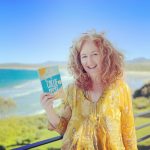 Are you new here? Welcome to my blog! I’m Allison Tait, aka A.L. Tait, and I’m the author of middle-grade series, The Mapmaker Chronicles, The Ateban Cipher, and the Maven & Reeve Mysteries, as well as my brand-new middle-grade mystery THE FIRST SUMMER OF CALLIE McGEE.
You can find out more about me here, and more about my books here.
by Allison Tait | Jun 13, 2023 | Reading, Your Kid's Next Read
Educators work hard! Creating units of work that meet the curriculum, engage students and produce great outcomes is not easy.
But authors and illustrators are here to help.
Australian author Charlotte Barkla has rounded up a list of resources created by authors and illustrators to help educators and their students connect with books and reading. As a teacher herself, she understands the value of an expert helping hand (particularly when most of these resources are free)!
Author/illustrator resources for teachers and librarians
A guest post by Charlotte Barkla
From teachers’ notes to newsletters, author penpals and writing tips videos, there’s no shortage of resources to help your classroom connect with authors/illustrators and their work.
The best part? Many of them are free*!
Teachers Notes
Teachers notes are a one-stop shop for creative writing activities. They’re usually linked to key curriculum areas, and are packed full of ideas for discussion questions, creative writing tasks and other activities.
For my early-middle-grade series, Edie’s Experiments, for instance, I helped write the teachers’ notes and also drafted a series of science activities.
Publishers often have a webpage devoted to the teachers’ notes for their titles, or you can find them on the author’s website. Otherwise, a quick google search on ‘book title + teachers notes’ will point you in the right direction.
Author Penpals
Inspired by BookPenPals, a UK initiative, Author Pen Pals connects Australian authors and illustrators with schools across the country.
The program was created by authors Kate Foster and Dee White, and pairs authors and illustrators with a class for one school year. Authors send the class four postcards throughout the year, chatting about books, sharing writing/drawing prompts and talking about their creative process.
So far, the program has connected 200 creators with 250 classes from 80 primary schools. An impressive achievement!
Videos
If you go down the rabbit hole of YouTube there’s no shortage of videos to inspire your classes. You’ll find writing tips for kids by A.L Tait, book-inspired Book’N’Boogie dance videos by Nat Amoore, ‘how to draw’ videos by Matt Stanton and nature journaling with Trace Balla.
Book Recommendations
If you’re looking for a book recommendation, you can’t go past the Your Kid’s Next Read Facebook group.
About to start a new unit of work, and looking for a picture book to introduce the topic?
What about a book that sparks the interest of that soccer-loving eight-year-old in the back row?
Whatever your question, type it in and you’ll have five to ten answers before you even press ‘post’. (Not quite, but it feels like it.)
Megan Daley’s website is another gold mine for book recommendations. She has helpful ‘Top 20 Book Lists’ covering babies through to adult readers, and hundreds of book reviews that can be filtered by age group and genre.
Newsletters
If you’re tired of department store sales newsletters and scam emails junking up your inbox, why not sign up to an author’s newsletter?
Newsletters can be a fun way to connect with authors and their work, and can also be a handy classroom resource.
 In my free newsletter, Behind the Books with Charlotte Barkla, I delve into one aspect of the writing or publishing process each month.
My first issue covered coming up with ideas, while my second delved into the drafting process. By the end of the year, I’ll take readers through the entire process of publishing a book, from idea through to publication.
The newsletter is kid-friendly, so teachers/librarians/parents of voracious readers are welcome to share the content with their kids and classes. (You’re also welcome to send in questions, for me to cover during the newsletter series.) I’d love you to join me!
Arts and Crafts
Not forgetting the younger age groups, there are lots of wonderful arts and crafts activities that tie in with Australian books.
Illustrators Matt Cosgrove and Anil Tortop offer crafts and colouring-in sheets on their websites, while Andy Geppert has a Boffins Backyard Craft Kit designed for nature-loving kids.
Author-illustrator Judith Rossell has templates for making delightful tiny houses and rainbow stars, as well as a monster-drawing game.
Writing Courses / workshops
If you’re looking for something meatier for your kids/classes, a number of authors offer writing courses too.
A. L. Tait runs the Creative Writing Quest For Kids at the Australian Writers’ Centre, Tristan Bancks offers Young Writers Story School, Nat Amoore and Tim Harris run Kids Writing Cool and Emily Gale and Nova Weetman offer Writing with Emily and Nova. Lots of great courses to choose from – and some take the Creative Kids Vouchers too!
Author/Illustrator Websites
Last but not least, check out the website of your favourite author or illustrator for links to teachers’ notes, activities or other resources.
Better yet, drop them a message to say you/your class enjoyed their book or activity. It’s guaranteed to make their day!
*Many of these resources are free, but if you’d like to support the author or illustrator you can buy their book, borrow it from your local library, or book them to speak at your school or library. Not just for Book Week, author / illustrator visits can be a valuable opportunity to motivate kids with their reading, writing and creating. And we love it too!
 Charlotte Barkla is a Brisbane-based teacher and author of four children’s books: All Bodies are Good Bodies, From My Head to My Toes, I Say What Goes and the Edie’s Experiments series. She is working on five new books, include a picture book with Hachette, a fiction series with Walker Books Australia and a fiction series with Scholastic.
Teachers notes and resources for all her books can be found on her website and you can sign up to her newsletter here.
 Are you new here? Welcome to my blog! I’m Allison Tait, aka A.L. Tait, and I’m the author of middle-grade series, The Mapmaker Chronicles, The Ateban Cipher, and the Maven & Reeve Mysteries. You can find out more about me here, and more about my books here.
If you’re looking for book recommendations for young readers, join the Your Kid’s Next Read Facebook community, and tune in to the Your Kid’s Next Read podcast!
by Allison Tait | Oct 18, 2021 | Writing for kids, writing tips for kids, Your Kid's Next Read
One of the best things that children can do to help develop their creative writing skills is to read – and read widely. By ‘read widely’, I mean reading beyond their usual favourite kinds of stories and into other areas on the bookshelf, including non-fiction. For instance, some of my best story ideas have been sparked through reading non-fiction books about history.
Beyond reading widely, though, I suggest to kids in my creative writing course that they teach themselves to read ‘like a writer’. Reading like a writer means going beyond simply enjoying the amazing story that an author has created and digging down into how the writer did it.
When I mention this to young students, I can see some of them roll their eyes, thinking that I’m about to start breaking down sentences and getting into an English lesson.
But I’m not.
What does ‘reading like a writer’ mean?
Mostly, reading like a writer is about looking for how writers handle information in their stories.
How do they impart it to readers – and when?
Where do they begin the story, and why does that matter?
What kinds of vocabulary are they using – and where do they choose to use it?
Usually I’m having this conversation after reading a piece of writing stuffed full of interesting ways to say ‘said’. Characters are interjecting, squeaking, crying, whimpering, whispering and all manner of other multi-syllable alternative to poor old under-appreciated ‘said’.
One of the best tools a young writer can develop is a wide and impressive vocabulary.
The next best tool they can develop is a strong appreciation of when to wield that vocabulary and when to stay their hand.
Reading their favourite authors with a critical eye is a good place to begin to understand the concept.
Three tips to help you learn to read like a writer
Tip #1: Start with a favourite book, one that you know really well so that you won’t get distracted by what’s happening.
Tip #2: Focus on the first chapter. Read it through a couple of times.
The first time, take note of the first page and how the writer uses it to draw you into the story.
The second time, look for the information – what information does the writer give you about the character, the setting and the problem in those first few pages. How is it given? Is it in dialogue, through action (looking in a mirror, what the character is doing).
The third time, look at the vocabulary – how often does the writer use a word other than ‘said’ with the dialogue? How often do they use big, unusual words?
Tip #3: Compare what you’ve learned with your own writing. What can you take away from what you’ve read to apply to your own stories?
Be warned though! Once you learn to do this well you’ll never be able to stop doing it!
You can hear Megan Daley and I discuss this aspect of writing for kids on episode 24 of Your Kid’s Next Read podcast. Find it here or where you get your podcasts.
 Are you new here? Welcome to my blog! I’m Allison Tait, aka A.L. Tait, internationally published bestselling author of middle-grade fiction. You can find out more about me here
Would you love more writing advice for kids? Check out my Creative Writing Quest, a 12-module online course with the Australian Writers’ Centre that takes kids, step-by-step, through the process of creative writing – from idea to producing an edited story. All the course details are here.
by Allison Tait | Mar 19, 2021 | Reading, Writing, Writing for kids, writing tips for kids, Your Kid's Next Read
“My child hates writing – what can I do?”
“How do I get my kid to love writing?”
Getting kids to write – and to love writing – can be a battle for parents. We know this because these questions (and many more just like them) are posed to authors over and over again.
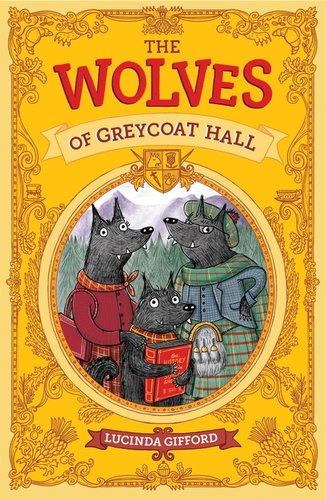
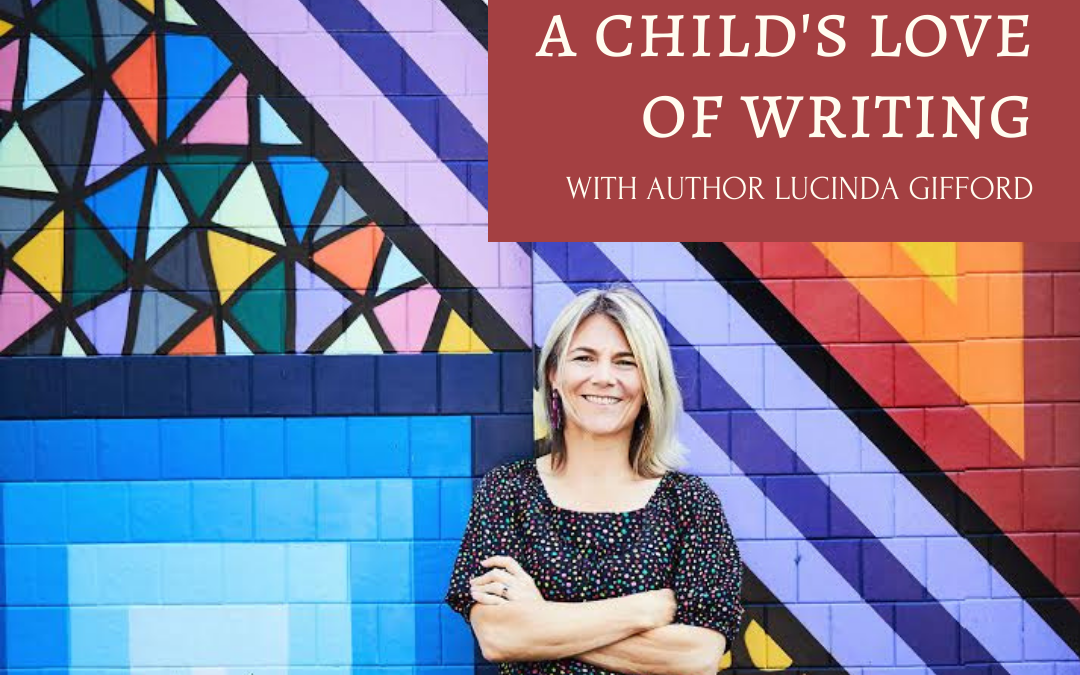
So much so, that Lucinda Gifford, Australian author and illustrator of picture books and junior fiction books, including the recently published (and very charming) novel The Wolves Of Greycoat Hall has created this post about her experiences in encouraging a love of writing in her own children.
Including the mistakes she’s made – and how she fixed them.
Take it away Lucinda!
Author Lucinda Gifford on encouraging kids to love writing
It’s a joyful moment when you see your child put pen to paper of their own accord. They’re being creative; they’re building worlds; they’re going to soar academically!
So what can you do to inspire and encourage your budding author, without overwhelming them? It’s a tricky balance, especially if you love books and writing yourself.
Here are some of the mistakes I’ve made (and I know I’m not the only one) – and what I’ve learned through them.
5 mistakes I made with my kids and writing – and how I made up for them
Mistake 1 – Correcting small errors
“I look over my child’s shoulder to peek at their work. Oh no! The first sentence goes on for two paragraphs. The spelling is all over the place. They’ve written the letter ‘a’ backwards.”
How I fixed it
Relax.
I’ve learned not to point out small errors, especially at the beginning. It takes away the fun. And writing should be fun for as long as possible, so that kids keep writing.Now I focus on complementing what does work – illustrations, fun details, interesting words, character names… and ideas.
If a child feels confident in their ideas, then they’ll happily come up with more ideas. This means more creativity, more writing, more skill-building, more fun!
Mistake 2 – Forcing the narrative
“So what’s it actually about, darling? Did you know that proper stories have a beginning, a middle and an end?”
How I fixed it
I realised quickly that rules like these are stifling early on – and that our kids will probably be told about story structure hundreds of times at school.
These days, I’m happy to sit back and enjoy my children’s originality. I let their writing take me back to my own childhood thinking, before I became a grown-up immersed in Western narrative structures.
Maybe a child has written a tale which starts off with a dragon called Alannah in a volcano and ends up with Pete the ice-cream being eaten by a llama. Great! I’m happy to enjoy the journey (and any ice-cream that might be available).
Mistake 3 – ‘Being the teacher’
“Maybe this is a good time to point out the difference between a verb and a noun. So they’ll be ahead in class later.”
How I fixed it
It is not a good time. Children meet lots of teachers in their life. School curricula cover adverbs, verbs, nouns, synonyms, homonyms, similes, metaphors…
Instead, I think about things I can do to bring their ideas to life – things that a teacher can’t do in a busy classroom.
For example: acting out a child’s story with favourite toys chatting about characters and ideas in relaxed down-time, reading younger children’s stories aloud in funny voices if permitted, and (our household favourite) discussing who would play the characters in a movie.
Mistake 4 – Oversharing
“Oooh! You’re writing about a dragon! Has you read Dragon Rider? Here it is! Oh look – here’s a picture of a dragon on Pinterest! We could get ‘Dragonology’ from the Op Shop? Oh there used to be a show about dragons when I was a kid. Let me look it up… Hello? Hello!”
How I fixed it
This is the mistake I make the most often. I get overexcited and can’t wait to share my knowledge, swamping my children with references. Much better to imply one has fascinating information, and then wait to be asked.
Step back and be subtle. (ps. If anyone has tips on subtlety, please get in touch.)
Mistake 5 – Expecting a finished piece of work
“But you started off so well – aren’t you going to finish it?”
How I fixed it
My child had a grand vision. They designed a fabulous, multicoloured dragon cover for their story and wrote a short but promising blurb for the back. Now, half a page in, they’re staring out the window.
I’ve learned to accept this might be it. In time they’ll need to develop their perseverance and learn organisational skills. But for now, writing is fun!
Pushing a child to keep working on an idea they’ve moved on from is not the same as encouragement. I mutter a favourite phase of my school art teacher “Process not product”, and leave it for a while.
And if my child doesn’t go back to this particular story idea, I put the fabulous dragon cover on the wall. Maybe I’ll write my own story about a dragon.
After all – writing is fun!
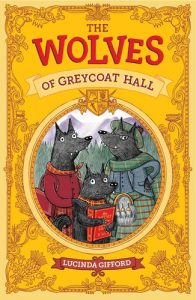 Lucinda Gifford is the author/illustrator of The Wolves Of Greycoat Hall (Walker Books) and the Whitney and Britney picture books (Scholastic), along with a host of others, as well as being the illustrator of a slew of titles ranging from picture books to middle-grade novels.
Find out more about Lucinda and her work here.
Would you love more writing advice for kids? Check out my Creative Writing Quest, a 12-module online course with the Australian Writers’ Centre that takes kids, step-by-step, through the process of creative writing – from idea to producing an edited story. All the course details are here.

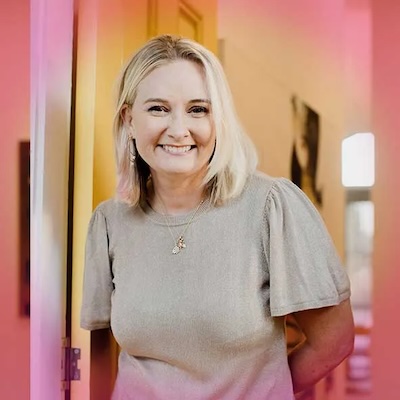 As well as being my partner in Quality Waffle, Megan Daley is a Teacher Librarian and has been awarded the ASLA Australian Teacher Librarian of the Year 2023 and the SLAQ Queensland Teacher Librarian of the Year, as well as the national Dromkeen Librarians Award.
  Are you new here? Welcome to my blog! I’m Allison Tait, aka A.L. Tait, and I’m the author of middle-grade series, The Mapmaker Chronicles, The Ateban Cipher, and the Maven & Reeve Mysteries. My latest novel THE FIRST SUMMER OF CALLIE McGEE is out now. You can find out more about me here, and more about my books here.